Plasma Cutter Consumables Explained
Plasma Cutter Consumables Explained
If the quality of your cuts suddenly goes downhill, don't automatically blame the power source.
More often than not, the real problem is sitting right at the front of the torch.
That's where the consumables live and do all the actual hard work.
They carry the current, shape the arc, sort out the gas flow, and protect the torch from the heat and flying spatter.
On most air plasma cutting systems, that front end is made up of five main bits: the shield, retaining cap, nozzle, electrode, and swirl ring.
The exact designs change depending on the machine, but the basic jobs stay pretty much the same.
Getting your head around what each part actually does makes it far easier to spot wear early, keep your cuts decent, and avoid wrecking the torch for no good reason.
Key Takeaways
- Plasma cutter consumables are the parts at the front of the torch that wear out during normal use and need regular replacement.
- The electrode and nozzle do the hardest work and usually wear out first, so they have the biggest effect on cut quality.
- The shield, retaining cap, and swirl ring last longer but still need regular checks because problems with them can quickly damage the other parts.
- Most consumables are made of copper for good current and heat handling, with special high-heat inserts in the electrode and insulating materials in the swirl ring and retaining cap.
- Consumable life depends on your cutting style, air quality, settings, and technique — regular inspection and good habits extend it far more than anything else.
What are Plasma Cutter Consumables?
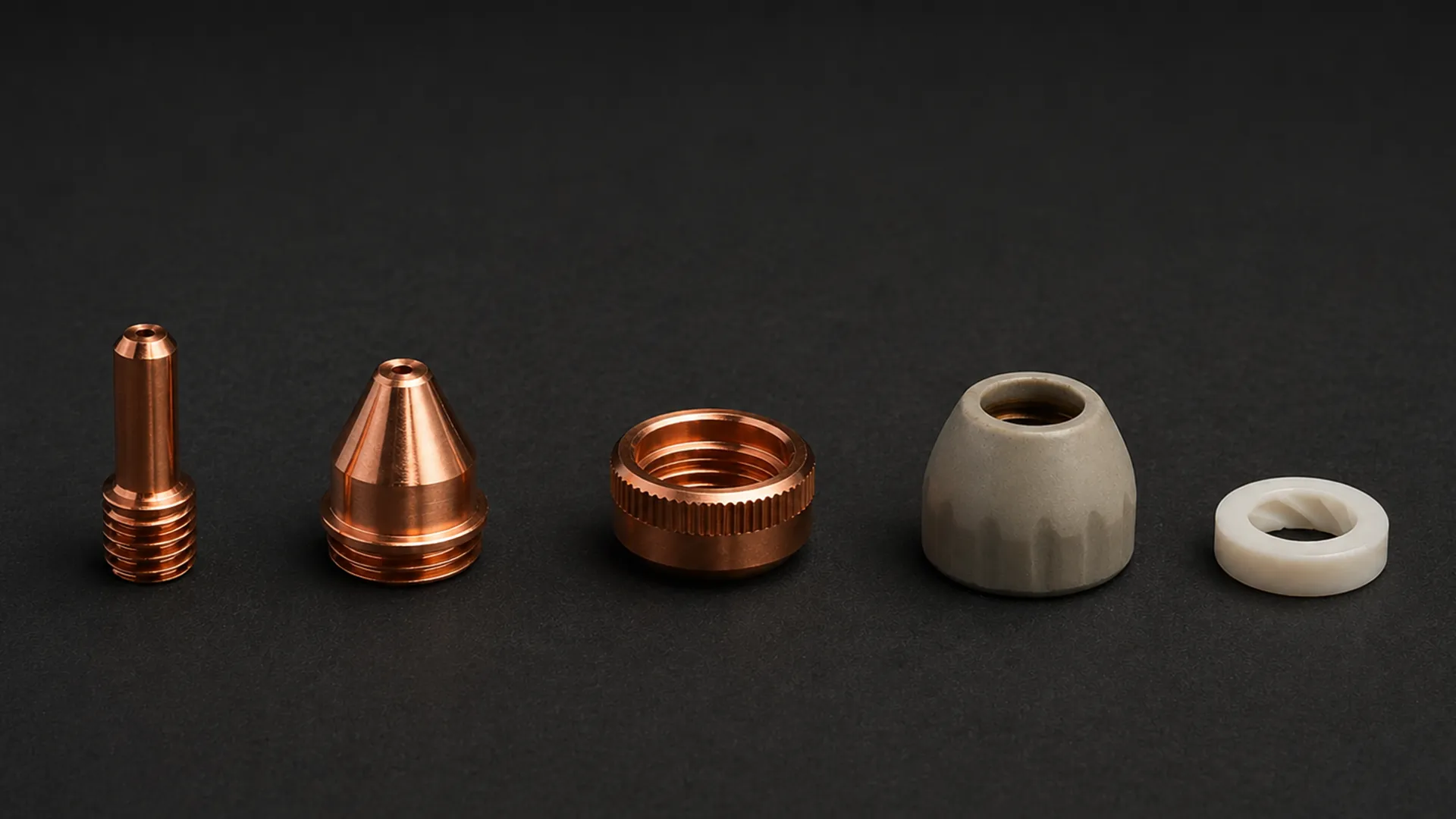
Plasma cutter consumables are the parts right at the end of the torch that wear out during normal use.
They sit in the middle of all the action.
Intense heat, fast-moving gas, lots of starting and stopping, molten spatter from piercing, and the constant blast of the plasma stream.
Because of that, replacing them regularly is just part of how things work.
It doesn’t mean anything has gone wrong.
In a standard air plasma setup, the main consumables are the electrode, nozzle, retaining cap, shield, and swirl ring.
Different brands might use slightly different names, but they’re basically the same parts doing the same jobs.
When these parts start to wear, you can usually see the problems straight away.
- The torch gets harder to start.
- You get more dross on the bottom of the cut.
- The kerf becomes wider.
- The edges go more bevelled and rough.
- The arc turns shaky and unstable.
Different Types of Plasma Cutter Consumables
The names can vary a bit from one torch to another, but what each part actually does stays pretty much the same across most modern plasma systems.
Once you understand the job of each piece, it gets a lot easier to look at how they’re wearing and work out if the issue is.
Electrode
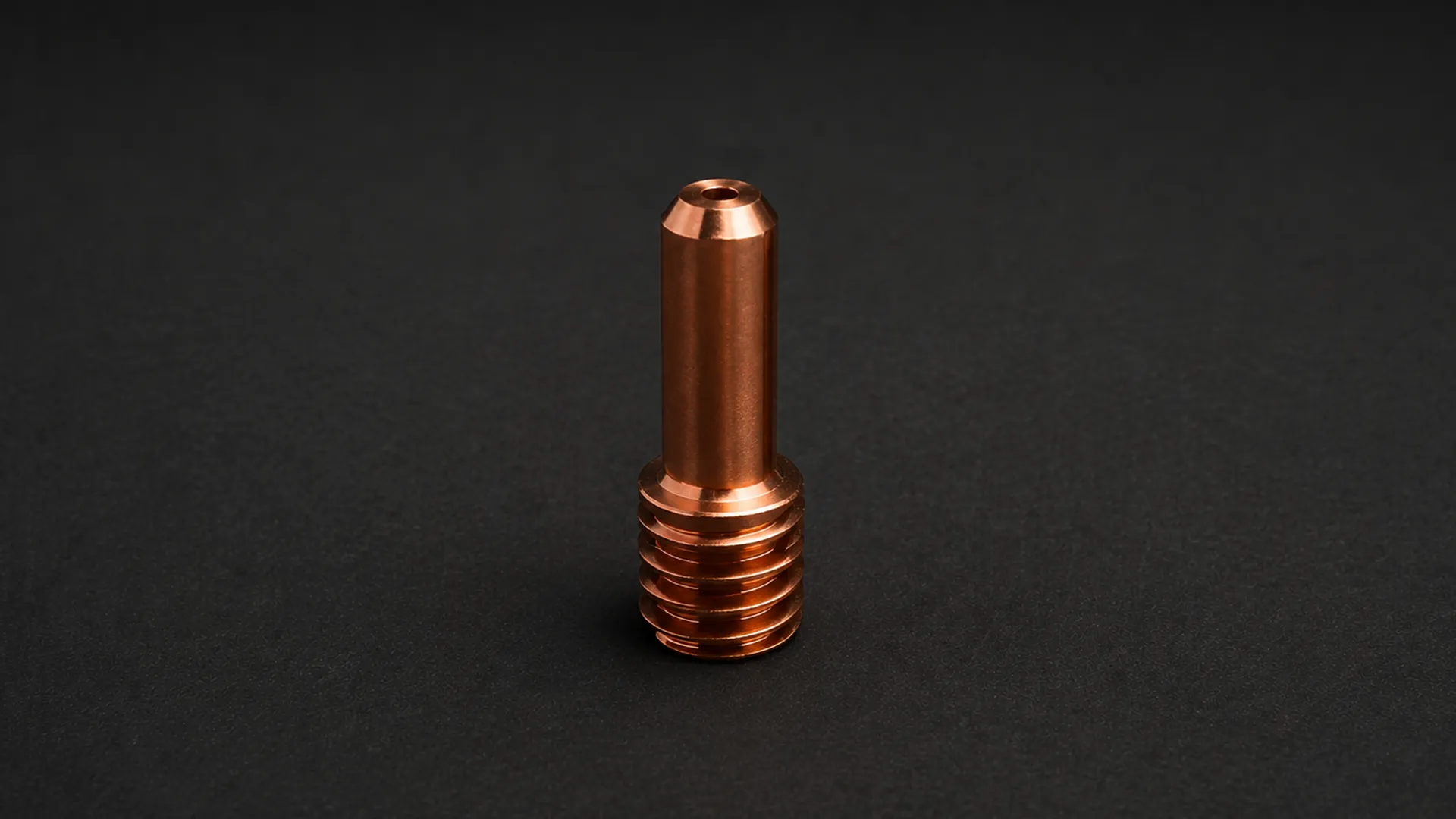
The electrode carries the negative charge from the power supply and helps hold the arc steady inside the torch.
As you use it, a small pit forms in the centre of the electrode.
That’s normal, but it shouldn’t get too deep.
If the pit goes too far, the arc can jump onto the copper body instead of staying on the insert.
That causes overheating, bad starts, shaky cutting, and eventually complete failure.
A new electrode keeps the arc centred properly, so once the pit gets too deep or the insert loses its shape, the performance drops off quickly.
Some higher-end electrodes use silver along with hafnium to pull heat away better and last longer, but the way they wear is basically the same.
Nozzle
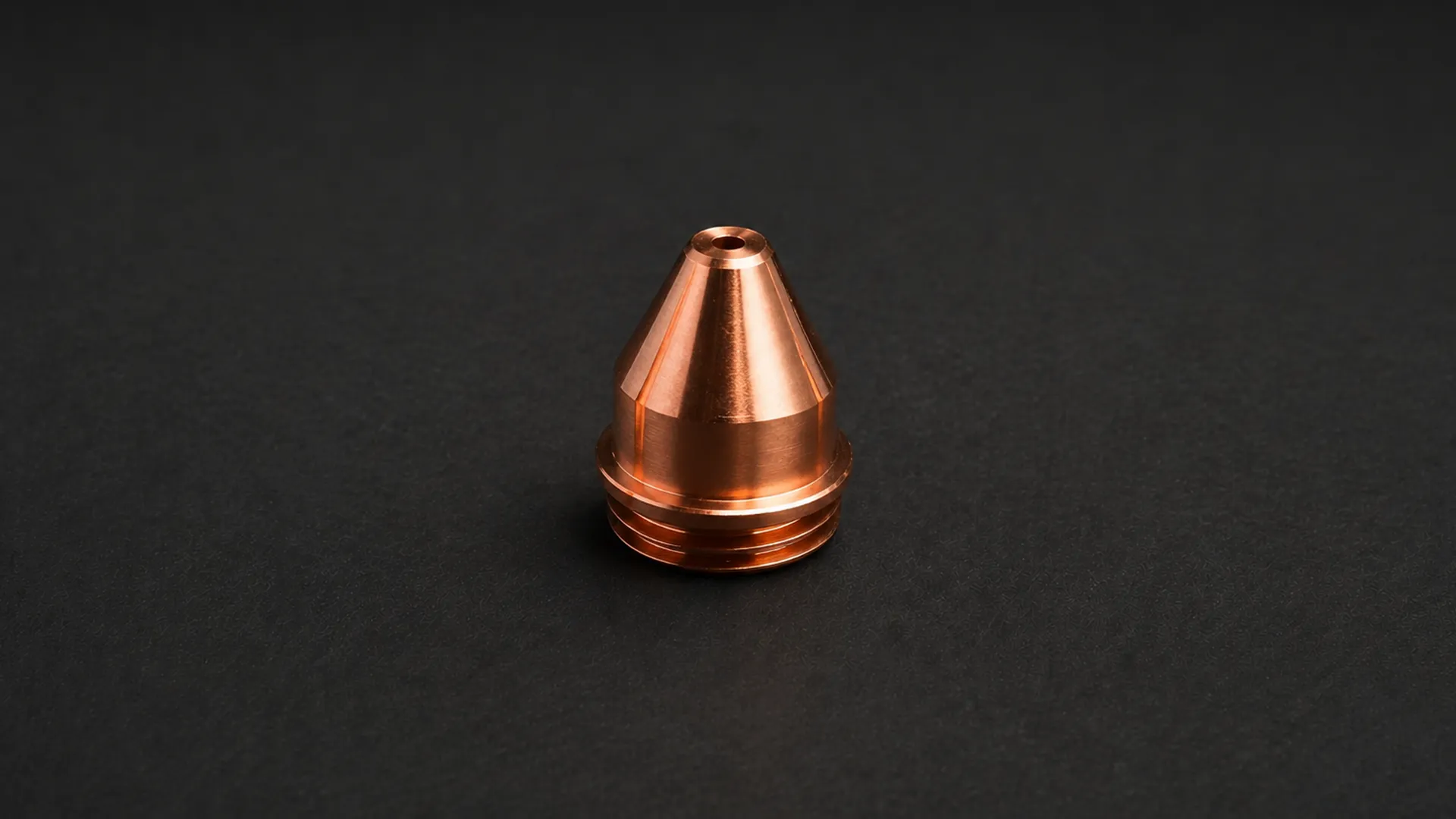
The nozzle sits right in the path of the plasma arc and its main job is to squeeze and focus that arc into a narrow, strong stream.
That’s why the shape of the hole in the nozzle is so important.
The hole needs to stay perfectly round and centred.
Even small chips, an oval shape, or wear around the edge can make the arc spread out, leading to wider cuts, more slag, and edges that aren’t square.
Most nozzles are made of copper, and during normal cutting the arc shouldn’t actually touch the copper.
The gas flow helps protect the inside walls.
A bit of wear and some residue inside is normal.
White material inside can often be cleaned out, but once the hole is no longer truly round, the nozzle needs replacing.
In everyday use, people often treat the nozzle and electrode as a pair because wear in one quickly affects the other.
Retaining Cap
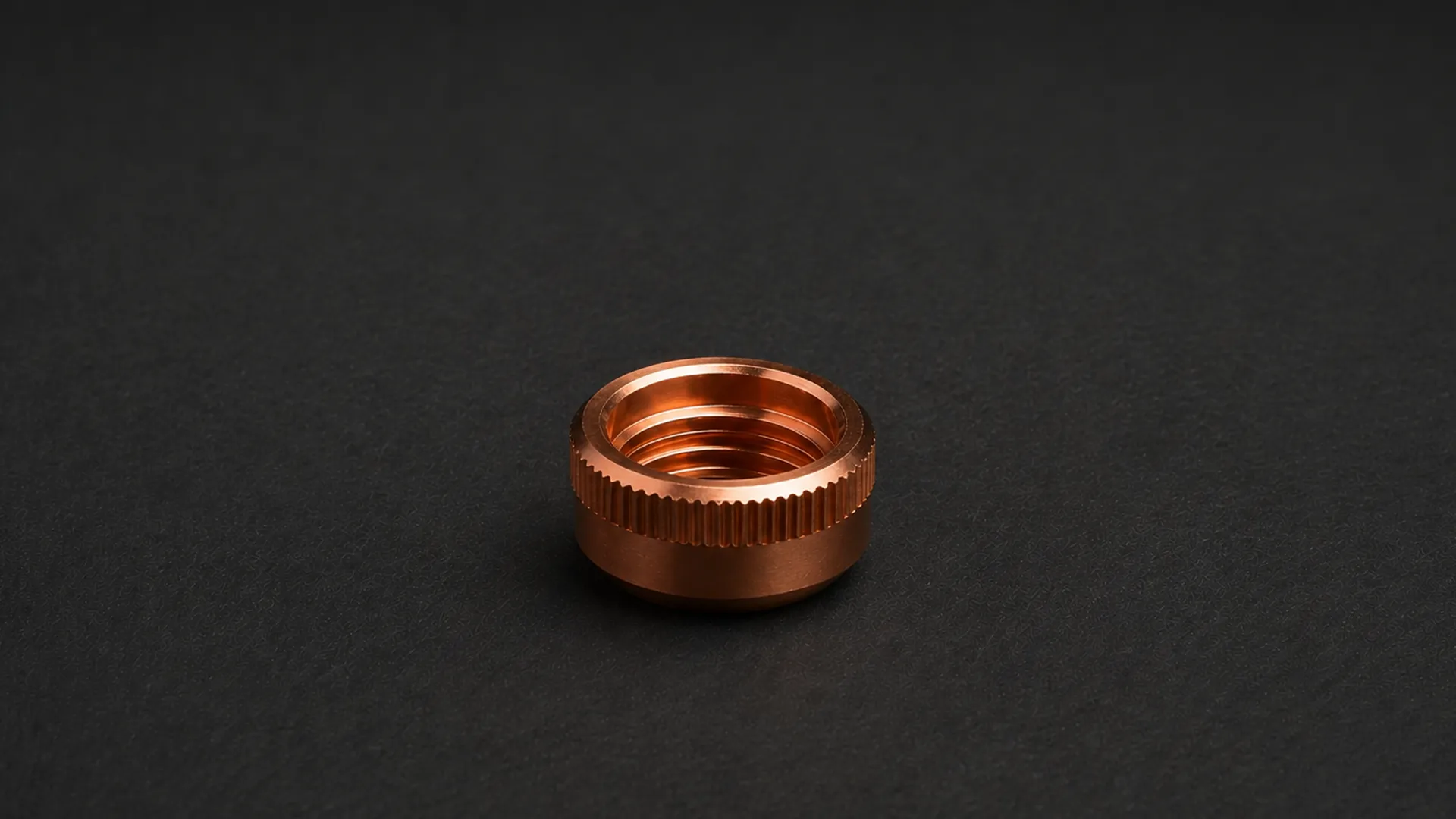
The retaining cap is easy to forget about because it doesn’t usually fail first.
However, it does an important job holding everything together and keeping the gas flowing in the right places.
It holds the nozzle and swirl ring in position, directs coolant or secondary gas, and keeps the shield lined up properly with the nozzle.
Many designs also have a composite section or ring that needs to stay clean and undamaged.
If that part gets burnt, cracked, or dirty, the whole torch can perform badly even with a fresh electrode and nozzle.
Retaining caps usually last longer than the hotter parts, but they still need checking.
Dirt, damaged threads, blocked holes, worn sealing surfaces, or too much lubricant can all cause problems.
A common tip is not to overtighten it.
Shield Cap
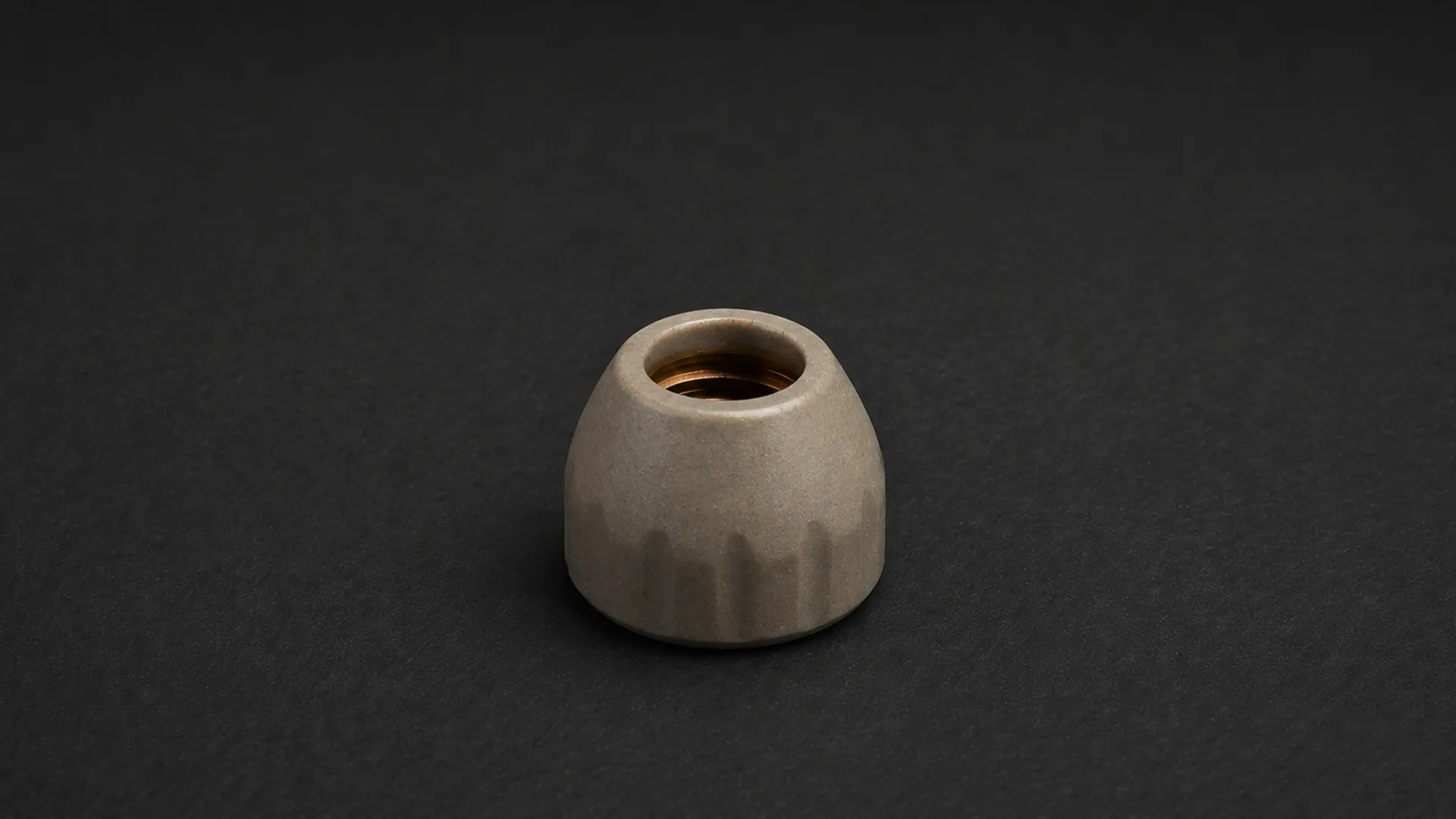
The shield cap protects the nozzle and helps the torch work properly while cutting and piercing.
On some machines it stops double arcing between the nozzle and the metal, helps cool the
front end, and keeps the cut edges square.
In drag-cutting setups, it lets you rest the torch on the plate without the nozzle touching the work or taking all the punishment.
You need to check it regularly.
The main opening must stay round and the small bleed holes must stay clear.
If the holes get blocked with spatter or the opening gets notched, the arc can shift and start damaging the other parts.
The good thing is that shields can often be cleaned and reused if the damage is just light spatter.
Deep gouges, big notches, or heavily blocked holes mean it’s safer to replace them.
Swirl Ring
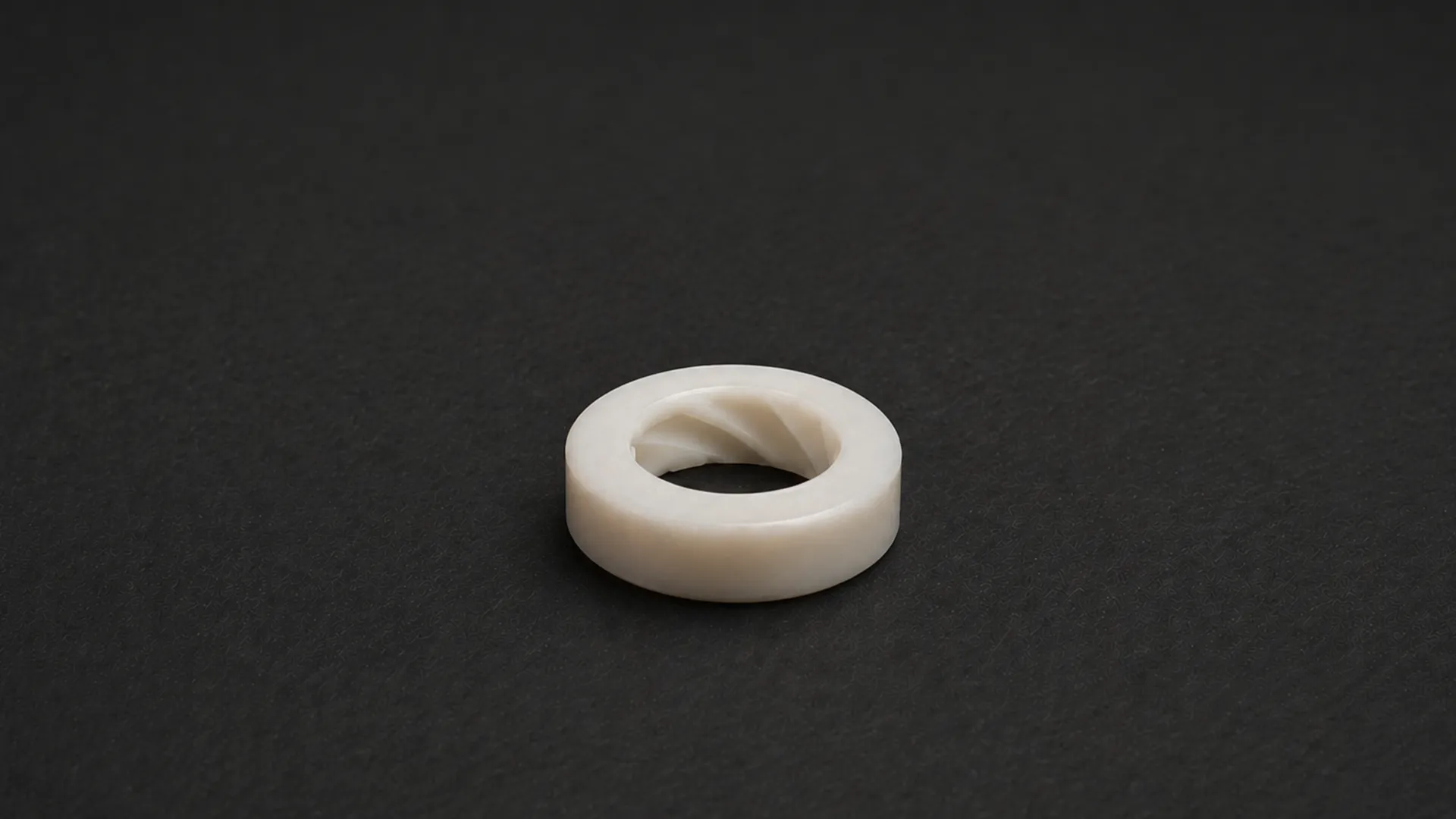
The swirl ring is one of the least understood parts, but it makes a big difference to how cleanly the torch cuts.
Its job is to control the gas flow around the electrode and nozzle so the arc stays stable and centred. In simple terms, it helps the torch breathe properly.
If the swirl ring is dirty, cracked, burnt, or fitted wrong, the arc becomes uneven and cut quality drops fast.
It’s more delicate than it looks, so clean hands and careful handling make a difference.
The good news is that swirl rings don’t usually wear out as quickly as electrodes and nozzles.
What are Plasma Cutter Consumables Made From?
There is no single recipe that fits every torch, but you can see a clear pattern in how these parts are made.
Parts that carry current or sit right in the heat of the arc are usually made from metals that conduct electricity well.
Parts that control gas flow or keep the electrical path separated tend to use insulating composites or ceramics.
Plasma cutting needs some parts to conduct electricity, move heat away, and survive wear.
Other parts need to guide the gas, stay the right shape, and stop electricity from going where it shouldn’t.
Electrode Materials
The electrode is the best example.
It is a copper holder with a piece of hafnium or tungsten inside it.
Copper is good at carrying current and pulling heat away, while hafnium and tungsten can handle the extreme heat at the tip where the arc starts.
Higher-end designs add silver into the front.
Some use a hafnium and silver connection instead of hafnium and copper to pull even more heat away and make the part last longer.
Even within the same type of consumable, the mix of materials shows what the part is trying to do - carry current, stay cool, last longer, or all of those things together.
Nozzle Materials
The nozzle is usually made of copper too.
Copper works well because it can shape the arc, get rid of heat, and be machined to very precise sizes.
Many shields and drag shields are also copper-based for the same reasons.
Swirl Ring & Retaining Cap Materials
The swirl ring and parts of the retaining cap are different.
They are often made from composite materials or ceramics because these provide good electrical insulation and can handle heat.
Retaining caps often have a front composite piece that helps centre the shield and direct secondary gas.
That is why these parts feel different in your hand compared to the metal ones.
Their job is to control the flow, keep everything aligned, and stop electrical problems.
Exact materials change depending on the process, gas type, amperage, and torch design.
But the basic rule is straightforward - use metal for current and heat, and insulators for control and separation.
How Long Do Plasma Cutter Consumables Last?
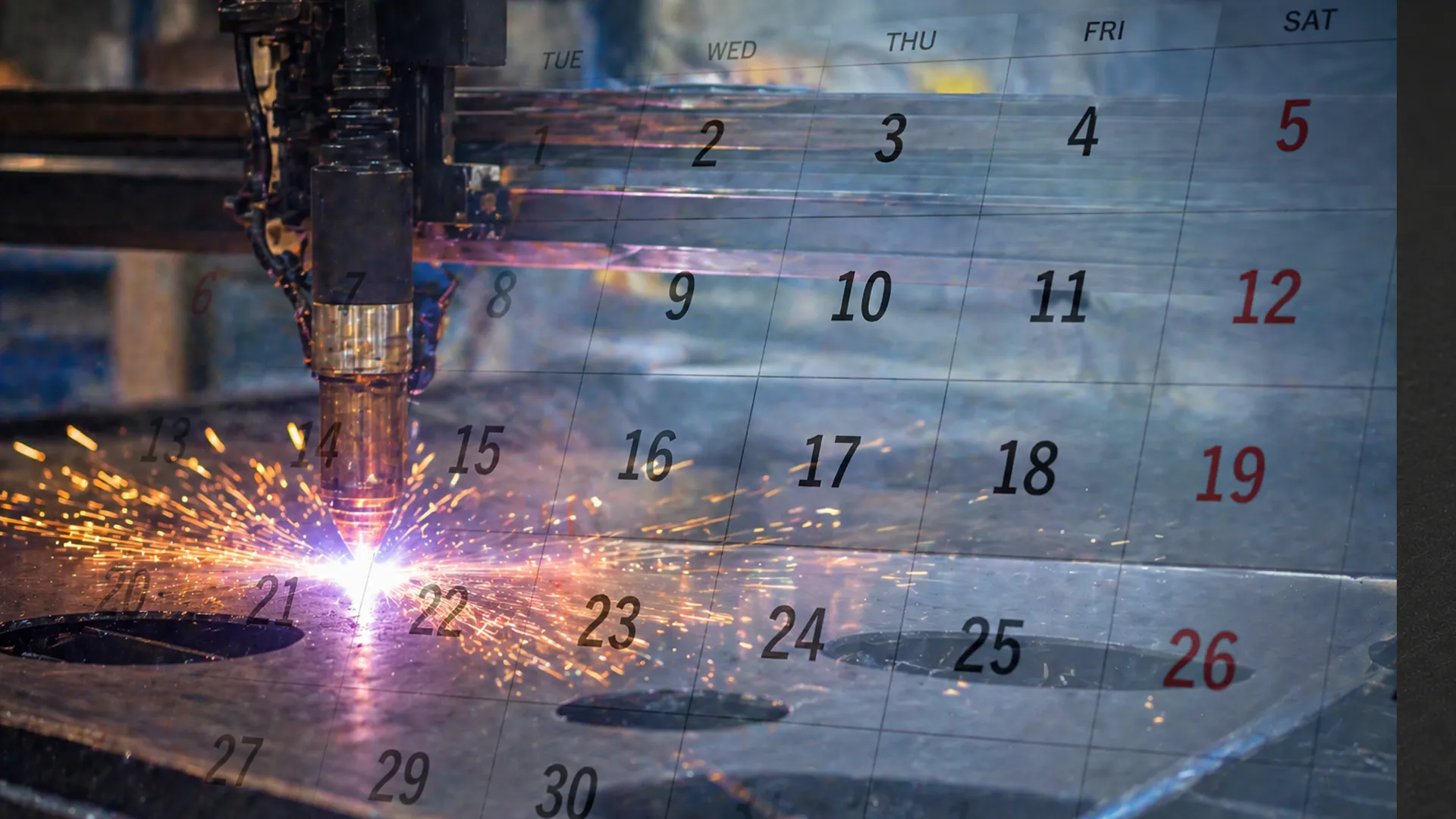
There is no simple answer that works for everyone.
How long they last depends on:
- The torch design.
- The type of material you are cutting.
- How often you pierce.
- The quality of your air or gas supply.
- Whether your settings match the job.
- How carefully you handle the torch.
On modern air and oxygen plasma systems, you can usually expect around 1 to 2 hours of actual cutting time and several hundred pierces before the parts need changing.
Some systems manage 1,000 starts or more.
That range is unpredictable because real life is unpredictable.
A job with lots of short cuts and frequent pierces wears consumables out much faster than long, steady cuts.
Poor air quality, wrong pressure, cutting too low when piercing, stretching the arc at the beginning or end of a cut, and keeping worn parts in use until they completely fail will all shorten the life quickly.
The best way to know how long they should last for you is to check them regularly and keep a note of how many starts or how much cutting time you normally get in your own work.
And remember, if your consumables have worn out, you can pick up new plasma cutter consumables right here at Xtreme Plasma.
How to Extend the Life of Plasma Cutter Consumables
Start with the basics.
Use the correct consumables for your process, the material, thickness, gas, and amperage.
Cleanliness matters more than many people realise.
Keep the front end of the torch clean, use only a very small amount of the correct O-ring lubricant, and make sure your air supply is dry and properly filtered.
Moisture in the air disrupts the plasma gas and shortens consumable life.
Check gas flow and pressure regularly too, because low flow or dirty gas wears the parts out faster.
How you use the torch is just as important.
Do not pierce too low, as that throws molten metal onto the nozzle and shield.
Avoid dragging the nozzle on the plate unless the torch is designed for drag cutting with the correct shield.
Do not fire the torch in open air, and do not keep running an electrode until it fails completely, because a dying electrode usually damages the nozzle and sometimes the shield as well.
Replace the nozzle and electrode together for the best cut quality, and do not overtighten the retaining cap.
In day-to-day use, a short inspection routine pays for itself.
Check the electrode pit, make sure the nozzle opening is still round, clear the shield holes, and look for cracks or blocked holes in the swirl ring.
Catching wear early is nearly always cheaper than trying to squeeze one more cut from a worn-out part.
FAQ
How do I know when my consumables need replacing?
Look for harder starts, more slag on the bottom of cuts, wider or rougher edges, and a shaky arc.
These signs usually show up before the parts completely fail.
What wears out the fastest?
The electrode and nozzle wear the quickest because they sit right in the middle of the arc and take the most heat and wear.
Does poor air quality really make a difference?
Yes - very much so.
Moisture or dirt in the air shortens consumable life a lot, so using dry, filtered air helps them last much longer.
Should I replace all the parts at the same time?
Not always, but it’s best to replace the electrode and nozzle together.
Check the others and replace them when they show wear or damage.
How can I make my consumables last longer?
Use the right parts for the job, keep the torch clean, use dry filtered air, avoid bad cutting habits like low piercing, and inspect them regularly before they fail.
Final Thoughts
Plasma cutter consumables are often treated like minor accessories, but they are really precision working parts.
- The electrode starts and carries the arc.
- The nozzle shapes it.
- The swirl ring controls the gas around it.
- The shield protects the front end.
- The retaining cap keeps the whole stack aligned and functioning properly.
When all five are in good condition and matched correctly, the torch cuts cleanly and predictably.
When one part is worn, dirty, cracked, or wrong for the job, the rest of the stack usually suffers soon after.
That is why the smartest way to think about consumables is as a system inside the torch.
Inspect them often, replace them before failure, and keep the basics right.
Do that, and consumables stop being a mystery and start becoming one of the easiest parts of plasma cutting to control.
For more information on plasma cutter consumables, or help with any and all of your plasma cutting needs, then get in contact with us here at Xtreme Plasma today.
Display prices in:GBP