Induction Heaters: Uses, Benefits and Buying Advice
Induction Heaters: Uses, Benefits and Buying Advice
WRITTEN BY: ROB ROSSETTI
Induction heaters are getting popular in workshops.
They heat things up quickly and only where you need it, without using an open flame.
That’s useful when you’re dealing with stuck metal parts, areas that could get damaged by heat, or jobs where you need control more than raw power.
This kind of heating is already common in big industries for things like treating metal, fitting parts tightly, and joining them together.
Now the same ideas are being used more in car repair, maintenance, and production work.
The technology works well.
The real question for anyone buying one is which model fits the kind of work you do, how much you want to spend, and the space you’re working in.
Key Takeaways
- Induction heaters heat metal from the inside using a magnetic field instead of a flame. This makes them fast, precise, and much safer than blowtorches for many workshop jobs.
- They are especially useful for loosening stuck bolts, shrink fitting parts, heat treating, and brazing. The heat goes exactly where you need it without spreading everywhere.
- The main benefits are better control, faster work, improved safety, and consistent results. However, they work best on iron and steel, and the right coil and setup are important for good performance.
- Price is a big factor. Entry-level models start around £600 while larger workshop machines can cost several thousand pounds. You need to think about how often you’ll use it.
- The GYS Powerduction range offers options from small portable units to bigger workshop machines. Choosing the right one depends on the type of work you do most often and your budget.
What are Induction Heaters?
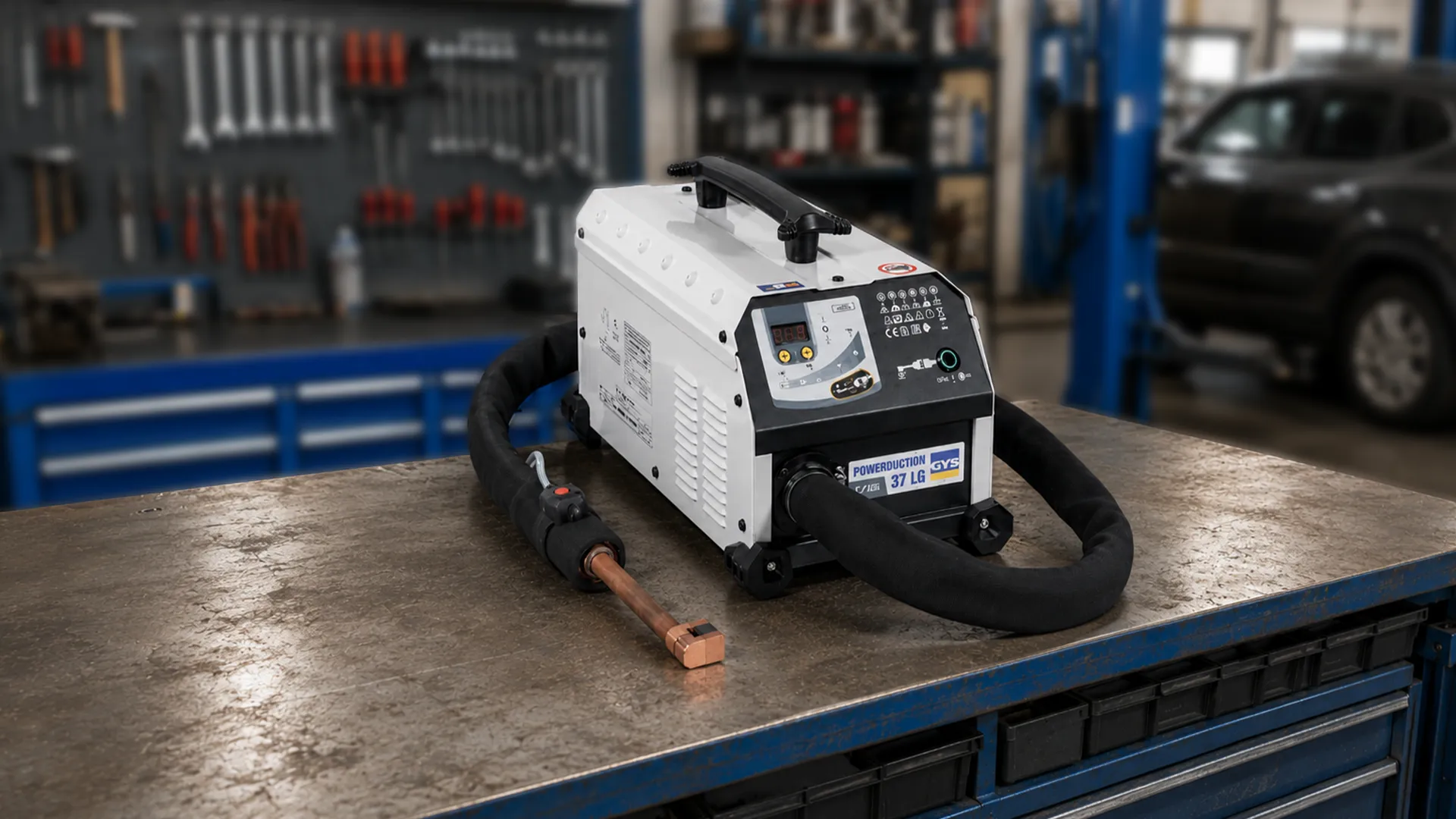
Induction heaters use a magnetic field to quickly heat metal from the inside out, without an open flame.
An induction heater is a machine that heats metal using a magnetic field instead of a flame.
Basically, the machine sends power into a coil, and that coil creates a magnetic field around the metal part.
This makes the metal heat up from the inside.
It’s different from a blowtorch, where you heat the outside of the metal.
Induction heating works best on iron and steel because these metals respond well to the magnetic field.
Other metals that conduct electricity can sometimes be heated too, but not as easily.
People like induction heaters because they heat things quickly, give good control, and don’t spread heat everywhere.
How Induction Heaters Work
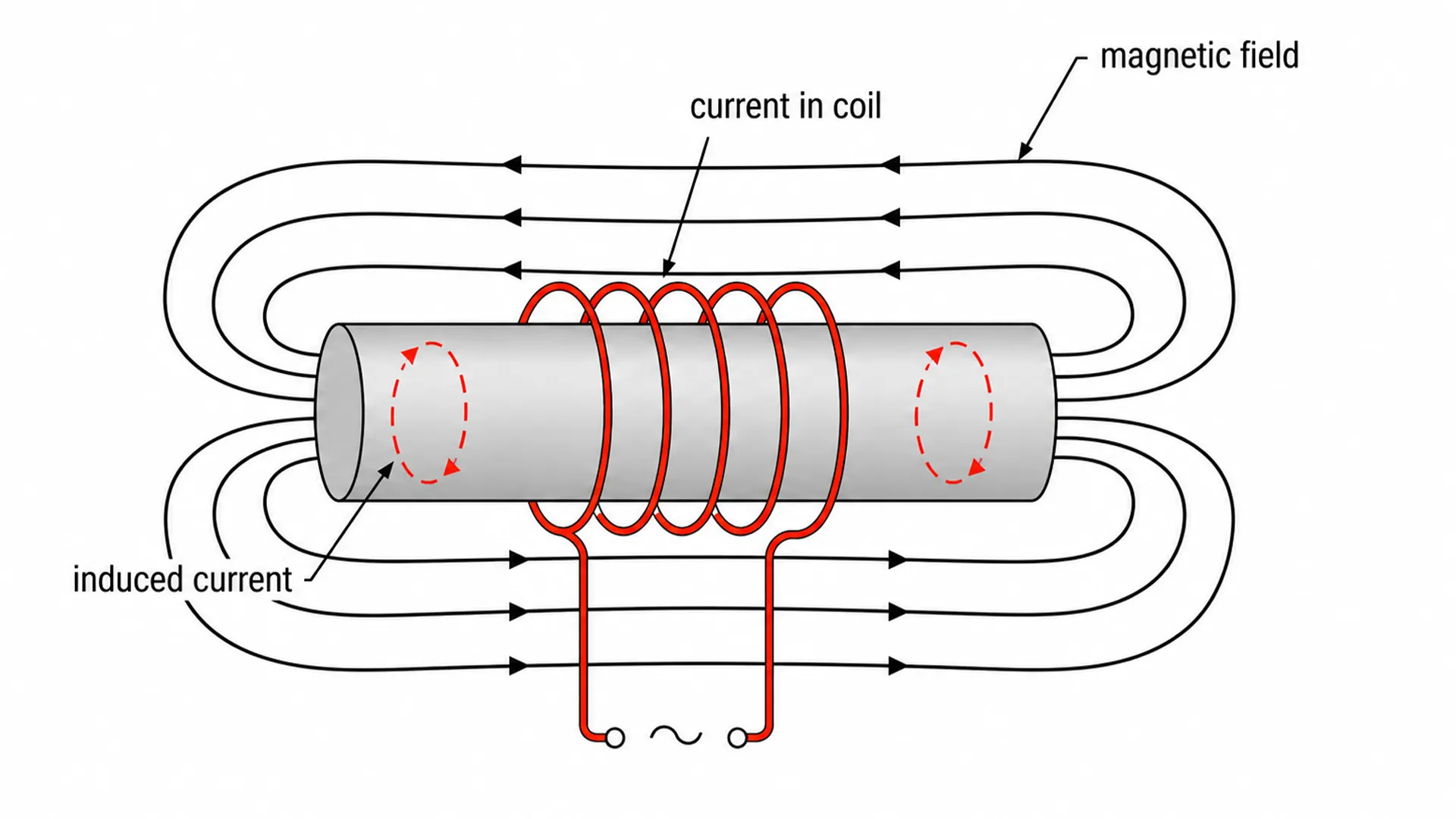
Induction heaters work by creating a magnetic field that generates electrical currents inside metal, heating it quickly and precisely from within.
The basic idea is pretty simple. Inside the tool, a coil creates a fast-changing magnetic field.
When this field passes through a metal part, it makes currents flow inside the metal.
These currents create heat because of the resistance in the metal.
With steel and similar metals, you also get extra heat from the way the metal reacts to the magnetic field, at least up to a certain temperature.
So the part heats up from the inside rather than having heat pushed in from a flame.
Why getting the setup right matters
This is why induction heating can be so fast and controlled.
The heat follows the shape of the magnetic field quite closely, so you can heat just the area you want without affecting everything around it like a broad flame would.
The speed of the current also changes how deep the heat goes into the metal, and how close the coil is to the part makes a difference to how well it works.
Why the right accessories matter
This is also why the accessories and coil design are important.
One machine can do plenty of jobs, but it still needs the right coil or attachment for the work you’re doing.
Smaller, more focused coils are better for smaller repair jobs.
Bigger systems or ones with a lance work better for heavier workshop or industrial tasks.
That’s not a problem with the technology.
It’s actually part of what makes induction heating so precise.
Induction Heater Uses
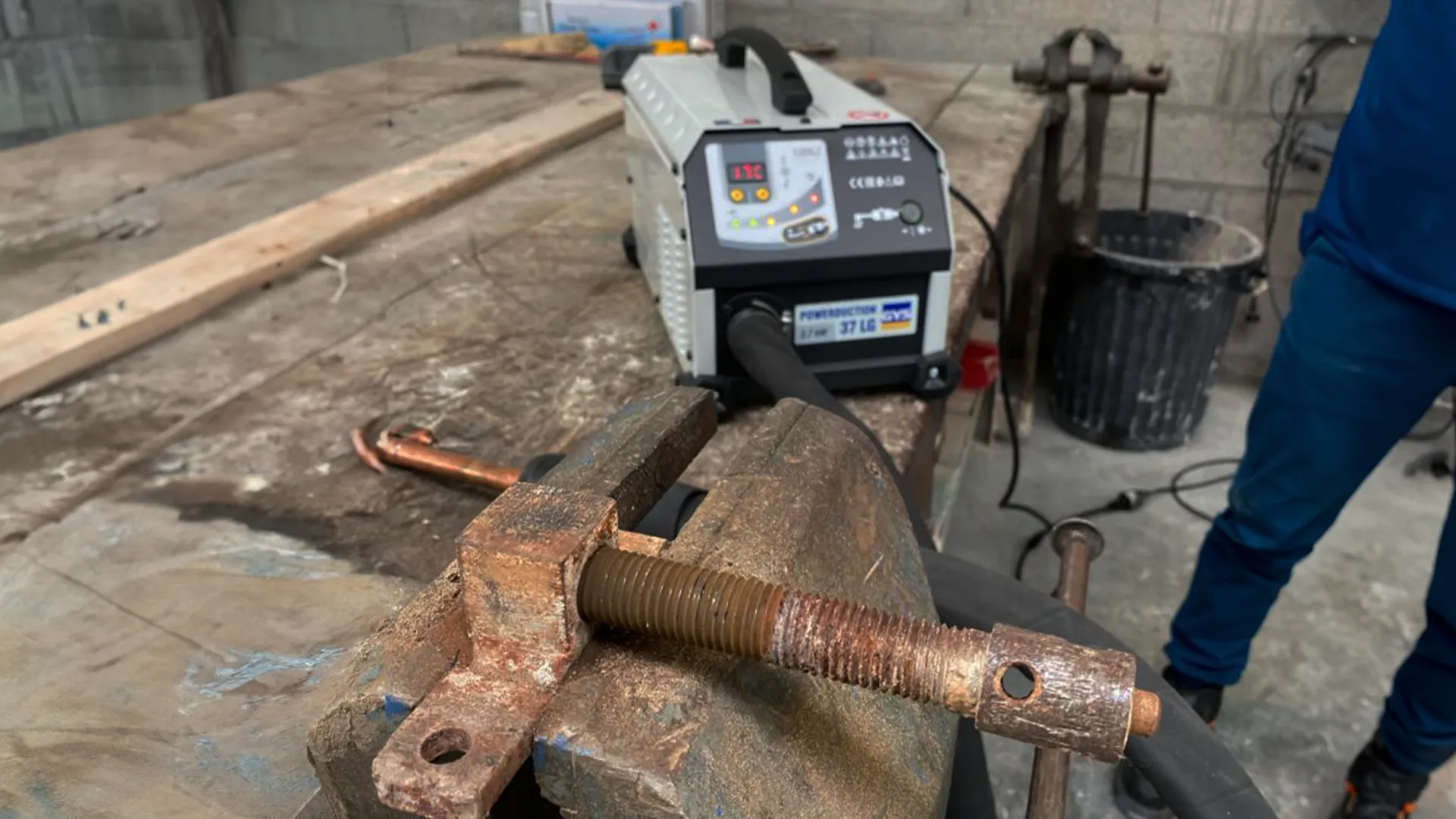
Induction heaters are widely used for loosening stuck bolts, shrink fitting parts, heat treating, brazing, and precise workshop heating jobs.
Induction heating machines have a wide range of uses, with some of the most common being:
Automotive Repair
The most common use is in car repair.
These heaters are great for loosening stuck bolts, bearings and other seized parts.
In a garage, being able to heat just the part you need without heating everything around it makes a big difference, especially with rusty fasteners.
Shrink Fitting and Assembly
They’re also used for shrink fitting and putting parts together.
You heat one metal part so it expands, fit or remove the other part, then let it cool and shrink back into place.
This is common with bearings, shafts and gears.
The heat goes only into the part you want to expand, not the whole area.
Heat Treatment
Another big use is heat treating metal parts.
Induction can be used to harden surfaces, soften specific areas, or heat steel parts in a controlled way.
Because the heat can be focused on one spot, it reduces warping and helps keep the rest of the part in good condition.
Induction Brazing
Induction is also used for brazing, which is joining two parts with a filler metal that melts at a lower temperature.
Because of this it can have some advantages compared to traditional gas brazing.
It heats the joint area quickly and consistently, which is useful in production work where you need the same result every time.
Wider Workshop and Industrial Use
More broadly, these heaters are used in manufacturing, maintenance and research work.
They’re a useful heating solution for workshops and industry, especially when repair work is involved.
Induction Heater Benefits
Induction heaters heat metal quickly and precisely from the inside without open flames, making them safer, faster, and more efficient than traditional methods.
Some of the main induction heater benefits are:
Precision
One of the main benefits is precision.
Because the heat is created inside the metal and focused by the coil, it’s much easier to heat just one specific area instead of warming up everything around it.
This helps protect nearby parts and reduces unwanted heat spread.
Speed
Another big benefit is speed.
These heaters can get the job done much faster because they deliver a lot of power in a short time.
In a busy workshop that means less waiting around, quicker removal of stuck parts, faster fitting and a quicker turnaround overall.
Safety
Safety is another advantage.
Without an open flame, there’s less risk of setting fire to things nearby or causing problems in areas where flames would be dangerous.
It avoids the extra heat and risks that come with a torch, making the job safer in a practical way.
Efficiency and Consistency
Induction heating is also very efficient because it heats the part itself rather than the air around it.
It gives consistent, repeatable results every time.
There’s no need for long pre-heating like some other methods, which makes it especially useful when you’re doing the same job over and over.
Induction Heater Drawbacks
Induction heaters can be expensive, require specific coils and setup for each job, and work best on ferrous metals.
While induction heaters certain have a lot of advantages, there are some drawbacks to consider:
Setup limitations
The biggest limitation is that induction heating isn’t suitable for every job in exactly the same way.
How well it works depends on the type of metal, the shape of the part, the coil you use and how close you can get the coil to the work.
You often need the right coil and setup to get the best results.
The Cost Factor
Cost is another thing to think about.
Entry level machines start around £600, while bigger systems can go up to nearly £9,000.
You need to consider how often you’ll actually use it and whether the type of work justifies the price.
Limits With Different Materials
It also works better on some materials than others.
Iron and steel respond very well, but not every job involves those metals.
It can still be used on other metals that conduct electricity, but results may not be as good.
For some tricky jobs, you might still need to use other tools or methods.
Induction Heaters VS Blowtorches
Induction heaters use electromagnetic fields for precise, flameless heating, making them safer and more targeted than blowtorches.
The biggest difference is how they create heat.
A blowtorch uses a flame, while an induction heater uses an electromagnetic field.
This changes the safety side of things straight away.
Blowtorches come with risks because of the open flame, sparks and hot bits of metal.
These can easily set fire to things like wood, paper, cardboard, rubber and plastics.
There are also risks with exploding drums or tanks, tyre explosions, gas leaks and flashbacks.
In some jobs you need fire watches and proper permits to stay safe.
The Difference in Control
That doesn’t mean blowtorches are no longer useful.
They still work well for some cutting and general heating jobs.
But if you need to loosen one stuck steel part in a crowded engine bay or heat just one component without an open flame nearby, an induction heater becomes much more appealing.
It gives heat only where you need it and removes the risk of a naked flame.
A blowtorch tends to be more aggressive and spreads heat over a wider area.
An induction heater is usually more focused, so it’s easier to heat just the fastener, bearing or part you actually want to move.
Which Induction Heater is Right for You?
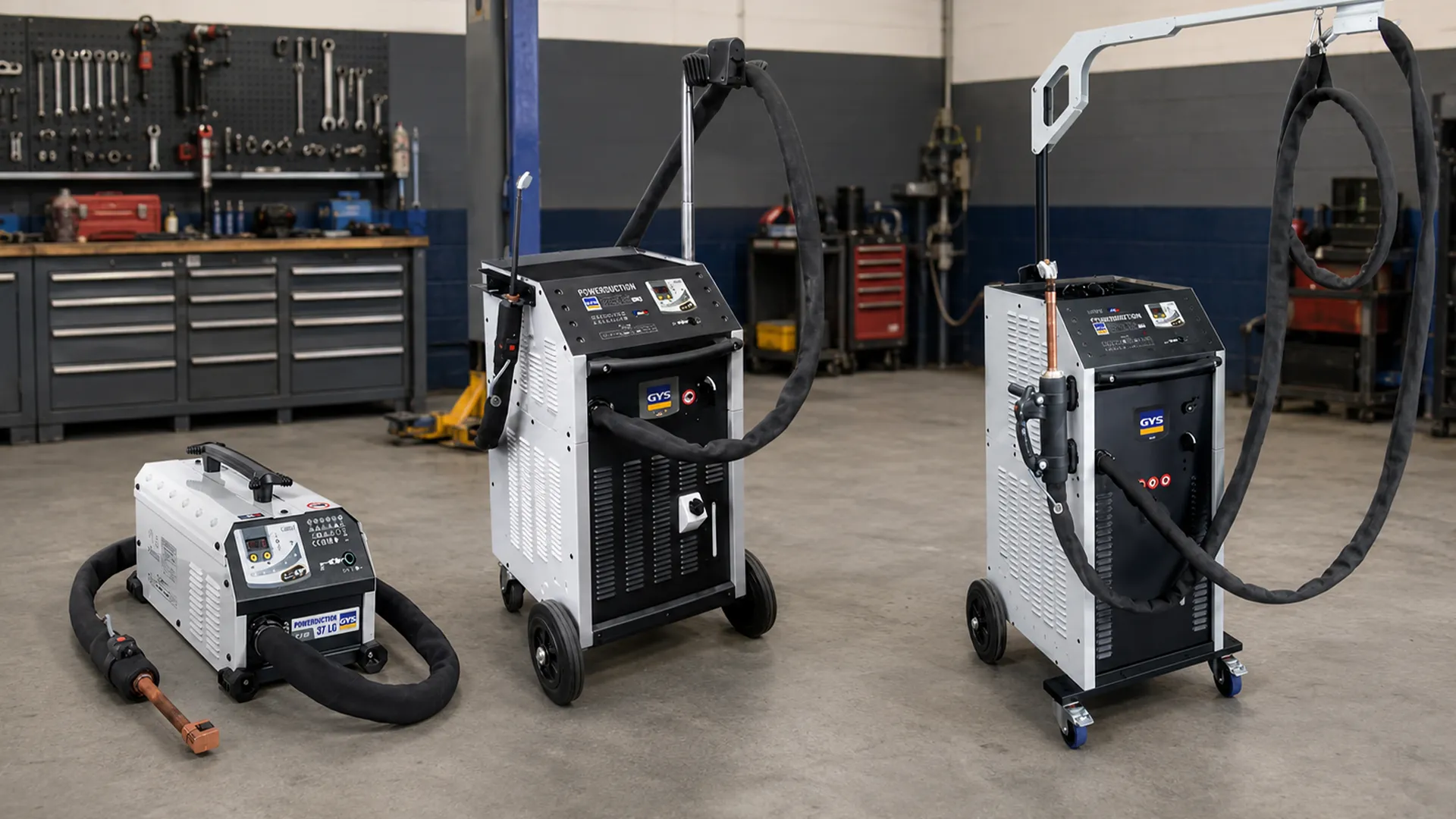
Choose an induction heater based on your needs: portable GYS Powerduction 10R/18R for light jobs, the 37L for most workshops, or larger models for heavy-duty work.
Like picking out the right welding machine, picking out the right induction heater is not always so easy.
Choosing the right induction heater depends on how much work you do and how often you need it.
Entry-level Options
For light or occasional use, the GYS Powerduction 10R Plus is the most affordable starting point.
At £599, you get a portable kit with five inductors and a carry case.
It is ideal for smaller jobs, mobile repairs, seized nuts, worn bolts and awkward tasks where using a gas torch feels too risky.
The GYS Powerduction 18R Plus is a smart step up for just £50 more.
At £649, it keeps the same portable format, case and five inductors, but gives you noticeably more heating power.
This makes it better if you deal with seized parts more regularly.
Best All Round Workshop Choice
For most busy workshops, the GYS Powerduction 37L pack is the best balanced option.
At £2,999, it offers much more capability than the smaller portable units.
It delivers 3.7 kW of power, is water-cooled, and adjustable in small steps.
The pack includes a trolley and an alloy wheel inductor, making it very practical for wheel work, seized steering parts, glow plugs, exhausts, driveshafts and bonded components.
It heats deeply into the metal without an open flame, which saves time and reduces the chance of damaging nearby pipes, cables or other sensitive parts.
Heavier Duty Models
The larger are built for heavier work.
Such as the:
These are better suited to HGV, agricultural, construction, maintenance and industrial environments where you need higher output and longer running times.
They are excellent machines, but most general workshops won’t need that level of power every day.
Why GYS Powerduction is Different
The GYS range is built around real working environments.
The 10R Plus and 18R Plus are compact, portable kits.
They are perfect for technicians who need a heater that moves with them.
The 37L pack adds water cooling, more power, a trolley and a wheel inductor.
That makes it a strong choice for everyday workshop use.
Above that, the 50LG, 110LG, 160LG and 220LG models give serious heating power for heavy vehicles, construction machinery, agriculture and industry.
Powerduction also gives room to grow.
You can start with a portable unit for light work.
You can then move up to the GYS Powerduction 37L (S90) for daily repairs.
And you can step into the larger LG machines for more demanding heating, bending, brazing, shrink fitting and maintenance tasks.
FAQ
Can induction heaters damage nearby electronics or wiring?
It’s best to keep sensitive electronics away from the coil while it’s working, as the strong magnetic field can affect them.
Most people simply move computers, sensors or wiring a safe distance away during use.
How long do the coils and accessories last?
The coils can last a long time with normal use, but they do wear out eventually, especially if they get knocked or overheated.
Remember to keep spare coils on hand for regular work.
Do I need any special training to use an induction heater?
Most people can learn the basics quite quickly, but it helps to understand how different coils and power settings affect heating.
Following the manufacturer’s instructions is usually enough for safe everyday use.
How do I maintain an induction heater?
Keep the machine and coils clean, especially the coil connections.
Check cables regularly for damage and store everything properly when not in use.
The main thing is avoiding dirt and impacts.
Are induction heaters portable enough for mobile repair work?
Yes, the smaller handheld models are quite portable and come with cases.
They work well for mobile mechanics or on-site repairs, though you still need a suitable power supply nearby.
Final Thoughts
Induction heaters are a proven way to apply fast, targeted heat without using an open flame.
This makes them particularly useful for loosening stuck parts, precision repairs, shrink fitting, and controlled workshop heating.
The main advantages are better control, less stray heat, no open flame, and a cleaner way of getting heat exactly into the metal part you need to move.
For most buyers, the decision comes down to workload.
If you only need occasional portable repair heating, a smaller handheld model can make sense.
And if your work is heavier or more industrial, the larger lance-based models are there to step up.
The best induction heater is not always the biggest one.
It is the one that fits your jobs, your pace of work, and your budget.
For more information on induction heaters, or help with all your welding needs, get in contact with us here at Xtreme Plasma today.
About the Author
ROB ROSSETTI
Rob Rossetti is the owner, founder, and driving force behind Xtreme Plasma, where he also personally handles technical support and customer care.
After years working as an engineer producing precision components for the oil, gas, and water industries, he founded the business in 2010.
He drew on hands on workshop experience to originally manufacture precision parts before expanding into the in-house design and production of complete CNC plasma tables.
Display prices in:GBP